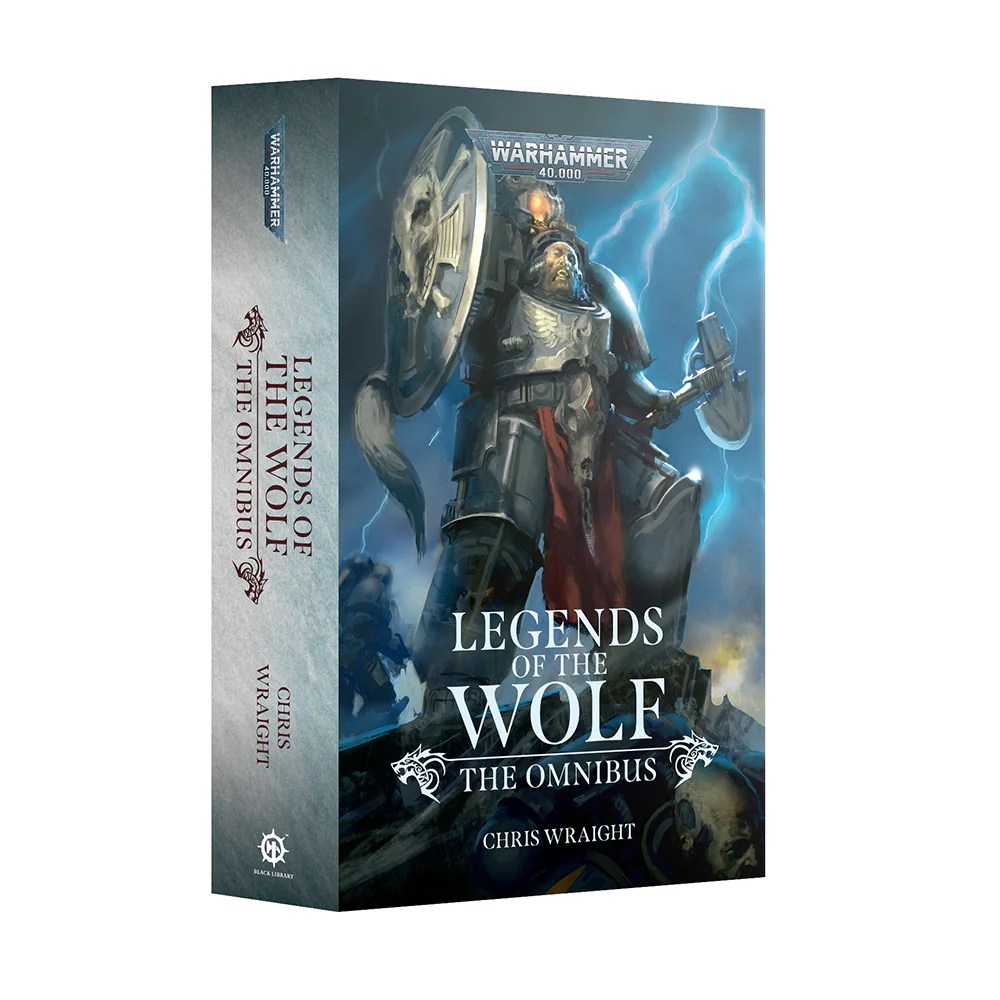
Chris Wraight has a reputation for being one of the most prolific authors of The Black Library. He’s written across a range of factions, though perhaps he is most well-known for his epic sagas of the Space Wolves. His Legends Of The Wolf trilogy/omnibus is one of the best of these sagas, focusing on Jarhamar company and their mission to protect a planet from a crippling plague that could threaten an entire section of the Imperium if left unchecked.
Diverse characterisation
What becomes apparent across the omnibus is that in a group of hyper-masculine vikings in space archetypes, Wraight’s characters are anything but one-note. Every member of Jarnhamar has a distinctive personality and place within the pack and the conflicts that shape it from the inside and outside.
All the members of Jarnhamar, save one, are Grey Hunters, grizzled veterans of the Chapter who have experienced countless battles. The outlier is Hafloi, a young Blood Claw added to the pack to give them new energy. Hafloi’s brazen and hot-blooded nature contrasts with and complements the older members of the pack, such as the pilot of the group Jorundur. Their mentor and mentee relationship is supported by Olgier, the member of Jarnhamar who holds a deep amount of respect for tradition and the regular humans that the pack interacts with throughout the books.
The main tension within Jarnhamar exists between Gunnlaugur, Wolf Guard and leader of the pack trying to hold onto his place and Ingvar, a Space Wolf who’s spent years serving with the Deathwatch and has returned to his brothers with something of an identity crisis. The two of them have philosophical differences about the priorities and goals of Jarnhamar. At the heart of these differences is Baldr, the psyker of the group whose powers awaken and force the pack to decide whether they can trust him or not.
When slipping between the POVs of every Jarnhamar member, I got a sense of their individuality and their temperaments. That’s just as well considering the amount of fighting and battles that explode across the pages and is part and parcel of Warhammer novels. There’s always a fine line to walk between fights that serve the plot and pulpy bolter porn, but Wraight walks that line well. He sticks to the former rather than the latter.
Viking comparisons that go beyond stereotypes
Another enjoyable aspect of Legends Of The Wolf is Wraight’s detail in outlining the unique culture and traditions of the Space Wolves. The language is steeped in Norse culture and viking vernacular, from the representation of fate as wyrd to mjod as a stand-in for mead.
The landscape of Fenris is explored in great depth too. I appreciated the Viking Age-like presentation of the Fenrisian tribes, particularly through Baldr’s perspective as he recalled childhood memories before being chosen to become a Space Wolf. Wraight shows an understanding of historical viking culture that goes beyond stereotype and fits well into the grimdarkness of the 40k universe.
With that said, Wraight’s writing style can veer into purple prose territory with grandiose description. I thought in places less could be more, but acknowledge that this kind of writing serves its purpose for a larger-than-life setting and poetic warrior demi-gods able to tear through armies in the blink of an eye.
For fans of the Space Wolves, Legends Of The Wolf is recommended reading for getting to know the sons of Russ.
– Michael Deguisa, still unsure whether the howl echoing in the distance is Fenrisian destiny or just the neighbourhood dog. Either way, I’m staying inside.
 40K Pulp
Leave a comment